

Foresight Library
In partnership with Future Agenda, explore strategic reports, foresight papers, and future-focused insights covering emerging trends, technologies, industries, and societal change to help organisations anticipate disruption and make better long-term decisions.
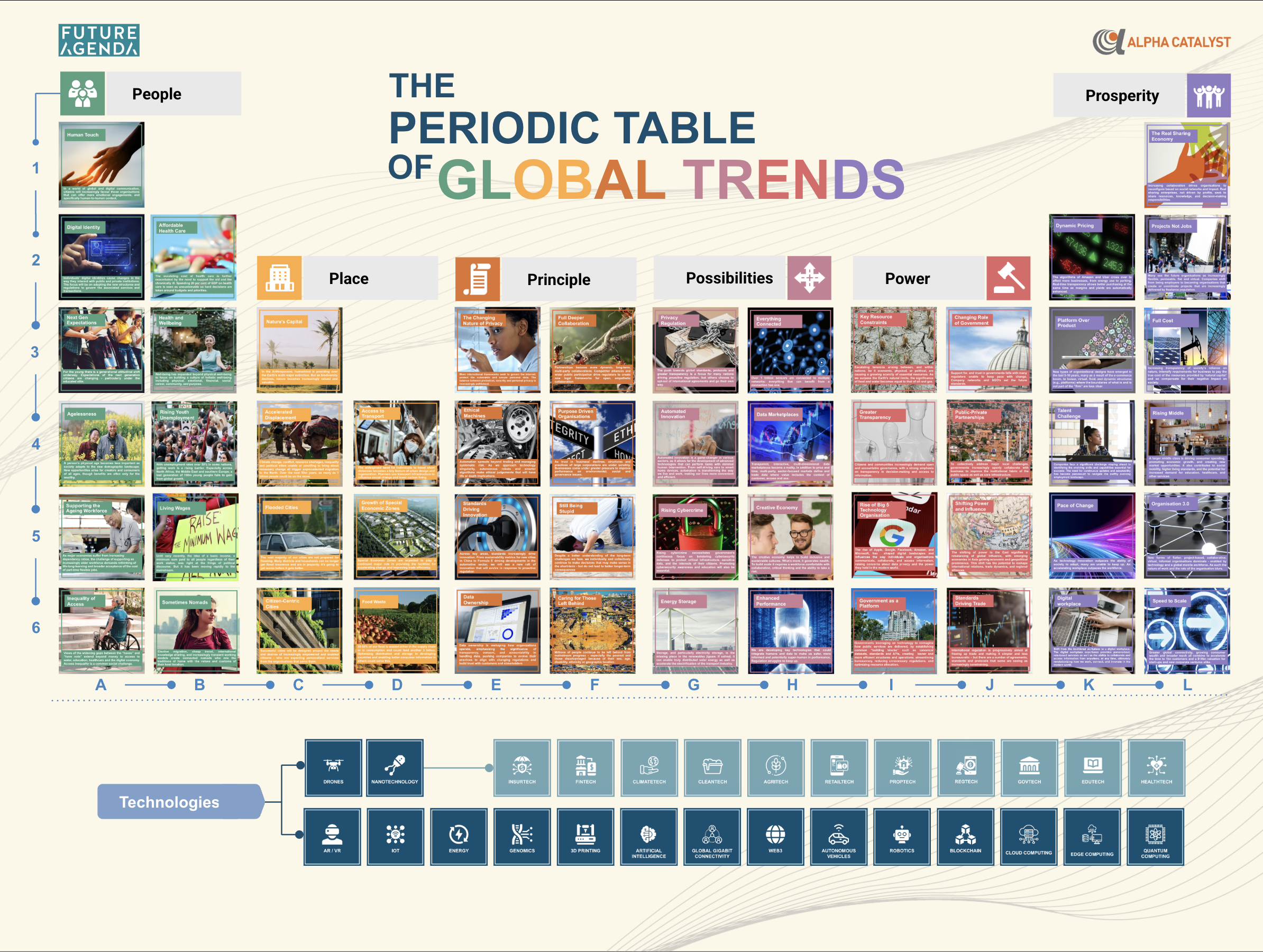
Looking Beyond Today's Challenges
The future is shaped by evolving technologies, changing demographics, economic shifts, environmental pressures, and new ways of working.
Our Foresight Library collection brings together research, strategic foresight, and thought leadership to help governments, organisations, and business leaders better understand what's coming next and how to prepare for it.
Many of these reports build upon years of global foresight collaboration and have been curated by Alpha Catalyst, in partnership with Future Agenda, to support better innovation, strategy, and transformation decisions.
Future of Work
Future workforce, skills, talent, leadership, workplace evolution.
Future of Organisation
Transformation, leadership, capability development, organisational design.
Future of Government
Public policy, governance, digital government, citizen services, smart cities.


Future of Technology
AI, digital transformation, automation, robotics, emerging technologies.
Broader Decision Making (2030)
By 2030, global decision-making will shift from centralized, state-led governance toward more collaborative, multi-stakeholder models that reflect an increasingly fragmented and interconnected world. As more nations, corporations, cities, NGOs, and citizens seek influence over global issues, traditional institutions must adopt more inclusive, transparent, and flexible decision-making frameworks. Organizations that can effectively coordinate diverse stakeholders while balancing competing interests will be better positioned to address complex global challenges and drive sustainable outcomes.
Hidden Organisations of Influence (2030)
By 2030, hidden organizations will exert growing influence over governments, markets, and society by leveraging data, surveillance technologies, and private networks with limited public accountability. As these organizations expand into mainstream sectors such as healthcare, finance, and cybersecurity, the lack of transparency and regulatory oversight will create increasing risks to privacy, trust, and democratic governance. Strengthening corporate transparency, data governance, and independent oversight will become critical to balancing innovation with public accountability.
Porous Organizations (2030)
By 2030, organizations will shift from traditional hierarchical employers to flexible talent ecosystems that combine full-time employees with independent professionals to access scarce skills and drive innovation. Success will depend on balancing workforce flexibility with effective knowledge management, digital collaboration, and talent strategies that attract, retain, and continuously develop expertise. Organizations that can preserve institutional knowledge while remaining agile will gain a sustainable competitive advantage in an increasingly dynamic business environment.