
Accelerating Corporate Innovation
Consultancy
From Insight to Action. From Action to Impact.
Innovation is not simply about generating more ideas. It is about helping organisations identify opportunities, address strategic challenges, develop viable solutions, and turn them into measurable outcomes.
The ACT Programme helps organisations accelerate innovation and transformation by combining strategic consulting, innovation capability development, and practical implementation. Through a structured, challenge-based approach, we work with organisations to reduce the gap between insight and action, and between action and impact.
The programme brings together the right combination of approaches, tools, and capabilities for each challenge. This may include ACC's InnovAsian® Framework, Design Thinking, Agile & Scrum methodologies, Business Model Canvas, Exponential Organisation principles, and digital innovation management tools.
The result is a practical pathway that helps organisations build the capability to innovate while addressing real organisational challenges and developing solutions that can be tested, implemented, and scaled.
Innovation Capability Built Through Real Challenges
Many organisations invest in innovation training but struggle to translate learning into organisational results.
ACT takes a different approach.
Rather than separating capability building from business outcomes, the programme combines both. Teams develop practical innovation capabilities while working on real organisational challenges, allowing learning to be immediately applied to the development of implementable solutions.
Depending on where your organisation is in its innovation and transformation journey, ACT can complement existing efforts, address specific innovation challenges, or provide a structured pathway from opportunity identification to implementation and scale.
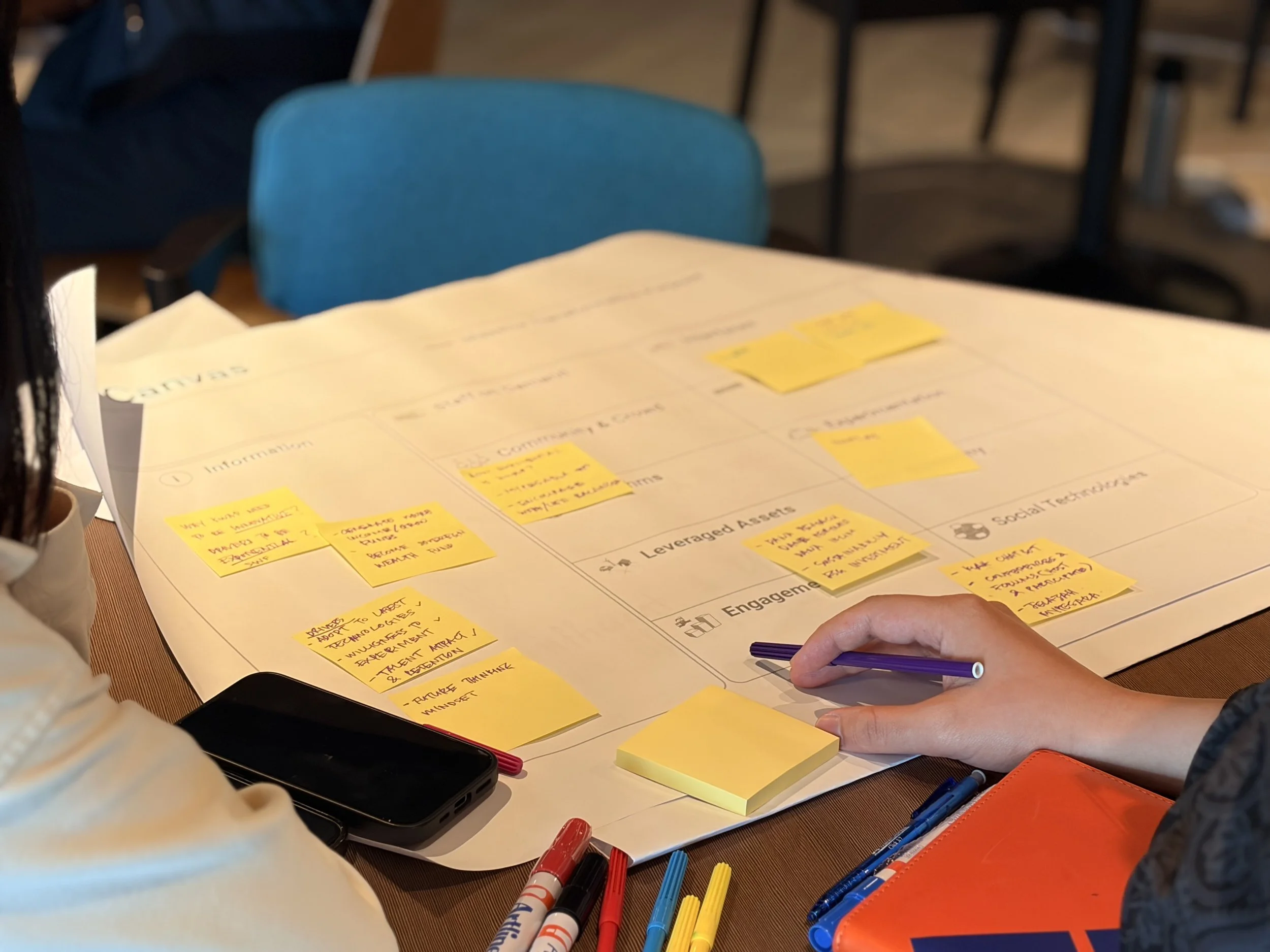
The Two Pathways to Innovation
Every organisation requires a different approach to innovation. ACT supports two primary pathways:
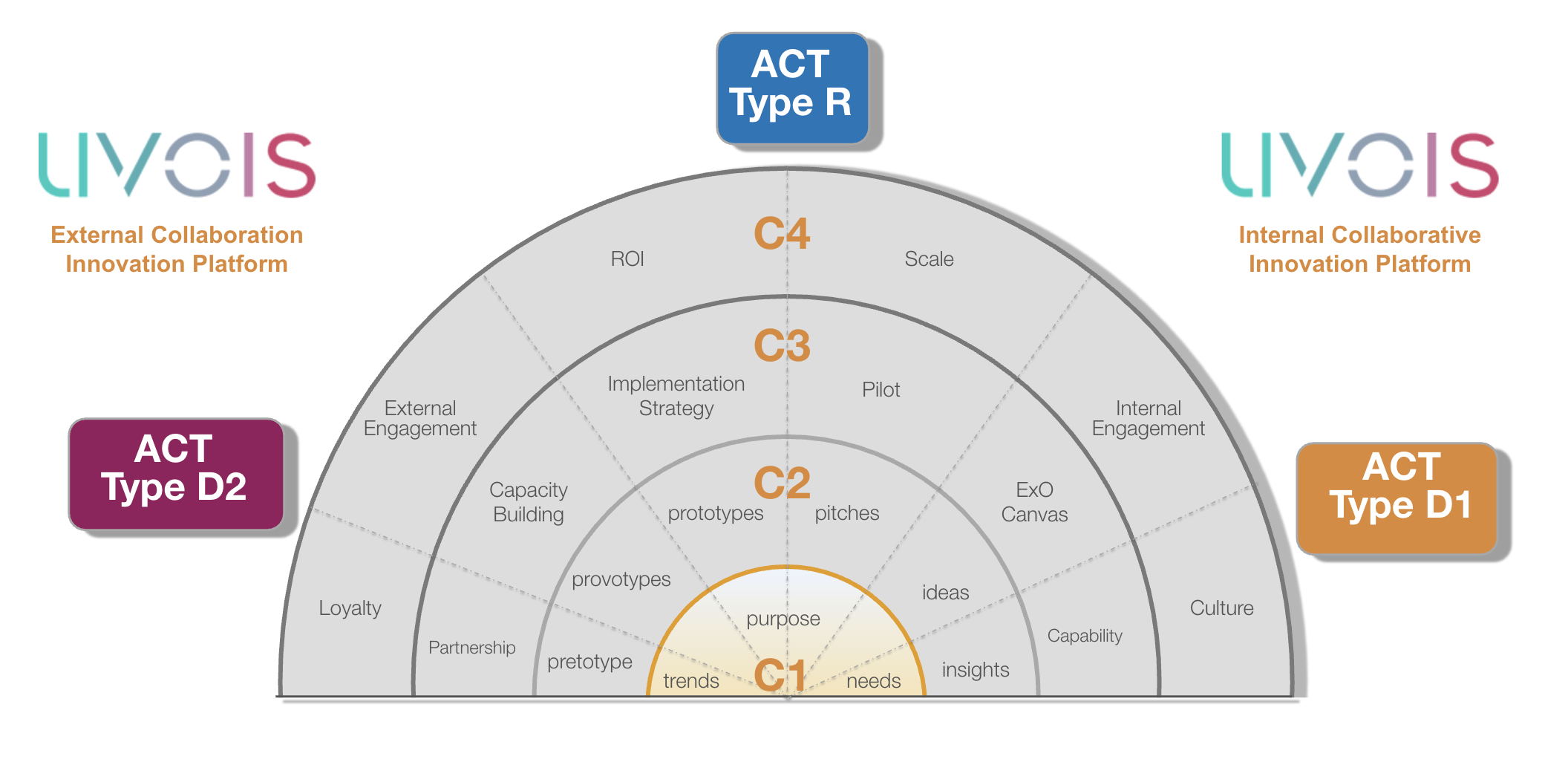
Focused on incremental to intermediate innovation, Type R helps organisations improve, adapt, and renew existing products, services, processes, and business models.
This pathway is suitable for organisations looking to:
Improve existing products and services
Address operational inefficiencies
Enhance customer or stakeholder experience
Develop new applications for existing capabilities
Identify new growth opportunities
Strengthen existing business models
Type D — Divergent Innovation
Focused on more radical or transformative opportunities, Type D helps organisations explore possibilities beyond their current operating models and markets.
This pathway may be pursued through:
D1 — Internal Innovation
Mobilising internal teams and organisational capabilities to explore and develop new opportunities.
Type R — Refine & Renew
D2 — Open Innovation
Engaging external ecosystems, including partners, suppliers, customers, startups, researchers, and other stakeholders, to access new ideas, capabilities, and solutions.
The two pathways can be pursued independently or combined as part of a broader corporate innovation strategy.
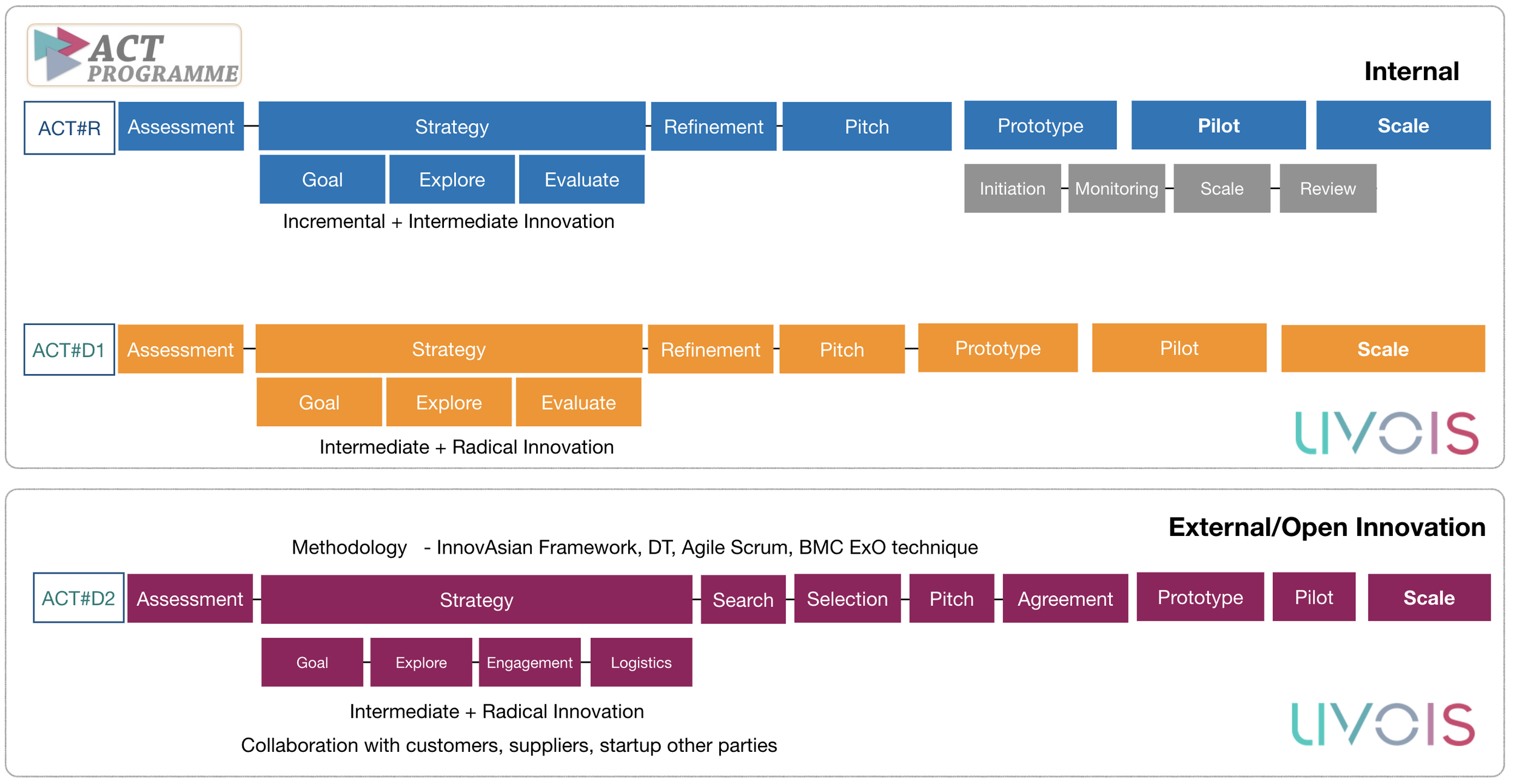
A Structured Pathway from Opportunity to Impact
ACT provides a structured pathway to help organisations move from understanding their current position to implementing and scaling solutions.
Step 1: Assess
We begin by establishing a clearer understanding of the organisation's innovation and transformation readiness.
The assessment considers factors such as organisational capacity, capability, culture, leadership, processes, and the ability to translate innovation into impact. The assessment can be applied across different functions, departments, and organisational levels to identify strengths, barriers, and areas requiring attention.
This provides a data-informed baseline for defining priorities and measuring progress over time.
Key outcome: A clearer understanding of the organisation's innovation readiness, capabilities, and transformation priorities.
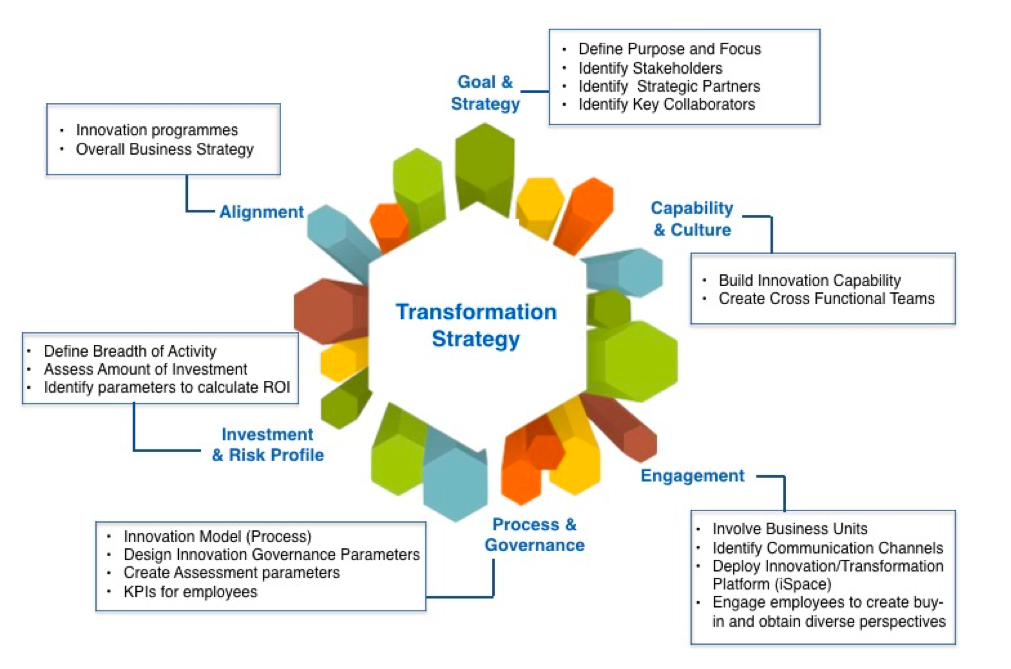

Step 2: Strategise
With the baseline established, we work with the organisation to develop a bespoke innovation and transformation strategy.
This includes defining strategic objectives, priority challenges, engagement approaches, capability requirements, governance mechanisms, and measures of success.
The strategy provides a clear direction for how innovation should be organised, activated, and connected to organisational priorities.
Key outcome: A practical strategy that connects innovation activity to strategic objectives and measurable outcomes.
Step 3: Capture
We create structured opportunities to identify and capture ideas, insights, and potential solutions from both within and beyond the organisation.
Depending on the challenge, this may involve employees, business units, customers, partners, suppliers, researchers, startups, or other ecosystem participants.
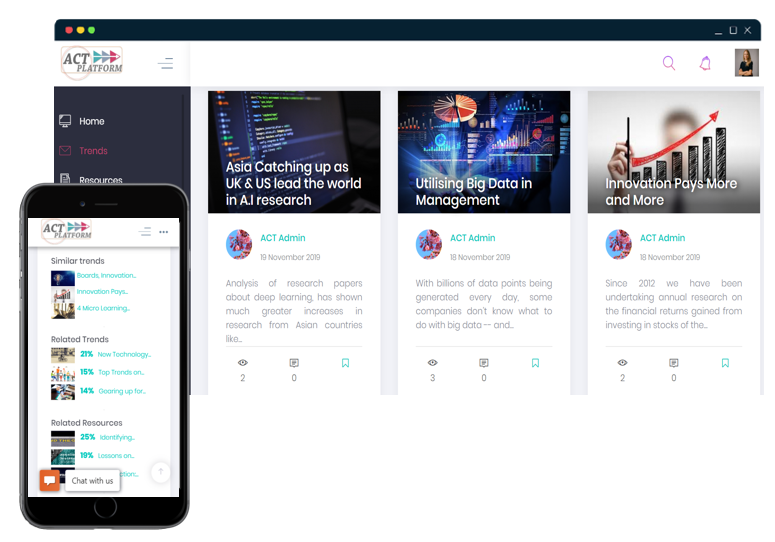
Digital tools can be used to expand participation, structure submissions, manage opportunities, and build a portfolio of potential solutions.
Key outcome: A structured portfolio of ideas and potential solutions aligned to defined organisational challenges.
Step 4: Prototype
Selected solutions are developed into initial prototypes or concepts.
This stage allows teams to test assumptions, explore feasibility, gather feedback, and improve the solution before committing significant resources.
By developing and testing ideas at an early stage, organisations can learn faster, reduce unnecessary investment, and make better-informed decisions.
Key outcome: Tested concepts and prototypes with clearer evidence of feasibility and potential value.
Step 5: Pilot
Promising solutions are tested in a controlled environment before wider implementation.
The pilot stage helps identify operational challenges, technical requirements, adoption barriers, and unforeseen issues. It provides an opportunity to refine the solution and establish the conditions required for successful implementation.
Key outcome: Validated solutions with evidence and learning to support implementation decisions.
Step 6: Scale
Once a solution has demonstrated potential, we support the organisation in preparing for broader implementation and scale.
This may include implementation planning, operating model considerations, stakeholder engagement, communications, capability requirements, technology enablement, and impact measurement.
The focus is to move beyond experimentation and embed successful innovation into the organisation.
Key outcome: A pathway for scaling innovation and translating successful pilots into sustainable organisational impact.
A Structured Pathway from Opportunity to Impact
ACT provides a structured pathway to help organisations move from understanding their current position to implementing and scaling solutions.
Strategy
Align innovation with organisational priorities and identify where innovation can create the greatest value.
Capability
Build the knowledge, skills, behaviours, and confidence required for teams to innovate effectively.
Solutions
Develop practical responses to real organisational challenges through structured experimentation and collaboration.
Implementations
Move promising solutions beyond ideas and prototypes towards adoption, scale, and measurable impact.
Supported by Digital Innovation Management
Where appropriate, ACT can be supported by ACC's digital innovation and transformation management platforms.
UVOIS can support internal innovation and transformation activities by providing a structured environment to manage challenges, ideas, initiatives, projects, portfolios, and performance.
For open innovation initiatives, the ACT Platform can support broader engagement with external communities, partners, and ecosystem participants.
Together, these digital capabilities help organisations maintain visibility across the innovation journey, from opportunity identification and idea generation to implementation and impact measurement.

Innovation That Moves Beyond the Workshop
The objective of ACT is not to generate more ideas or conduct innovation activities for their own sake.
It is to help organisations build the capability, structures, and momentum required to turn opportunities into action and action into impact.
Whether your organisation is looking to improve existing operations, develop new growth opportunities, build internal innovation capability, or explore more radical opportunities through open innovation, ACT can be adapted to your starting point and strategic priorities.